
In March 2025, I wrote the article ‘Evolutionary Map of Immersive Audio: Technologies, Companies, and Trends toward 2030’
One year later, the landscape has undergone seismic shifts. What was expansion in 2025 has become friction and validation in 2026.
We have moved from technological curiosity to an interoperability crisis that demands a new adoption architecture. Here is the updated analysis of a map whose operational DNA has mutated in just twelve months.
Anatomy of a Crisis
Between 2025 and the early months of 2026, several key events shook the audio industry, exposing a structural problem: when workflows depend on closed environments and major corporate players, the entire chain remains vulnerable to sudden, unpredictable changes that directly impact professional work.
Dear Reality Shut Down (July 2025)
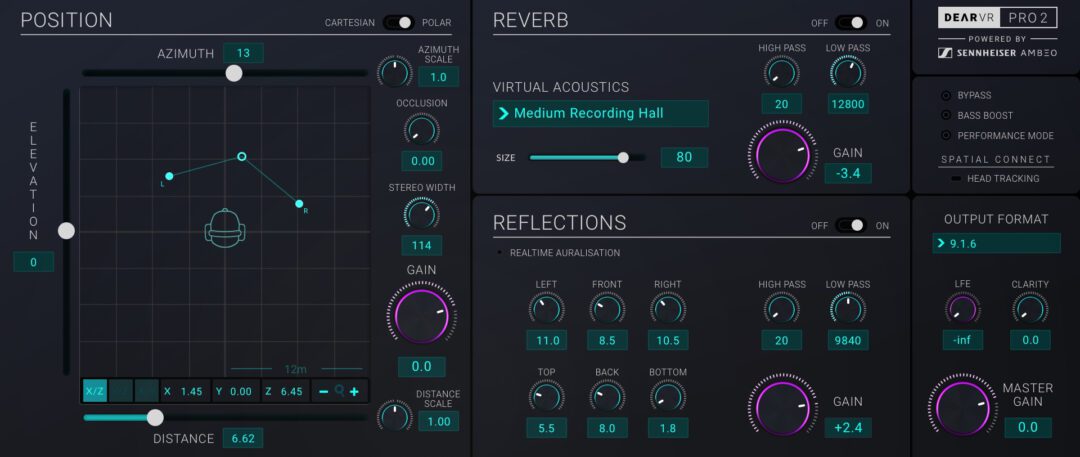
Dear Reality specialists in binaural plugins and 3D rendering dearVR series ceased independent operations on July 31 2025 as part of a strategic consolidation under Sennheiser Group.
This was not a bankruptcy but rather a corporate integration. Sennheiser incorporated Dear Reality strategic assets including HRTF libraries and upmixing algorithms and rendering architecture into its AMBEO ecosystem along with their accumulated technical expertise and patents and design criteria.
As a transitional phase the legacy versions of dearVR including PRO 2 and MICRO were released for free before the definitive deactivation of licensing systems in 2026. (https://www.sennheiser.com/en-us/immersive/dear-reality)
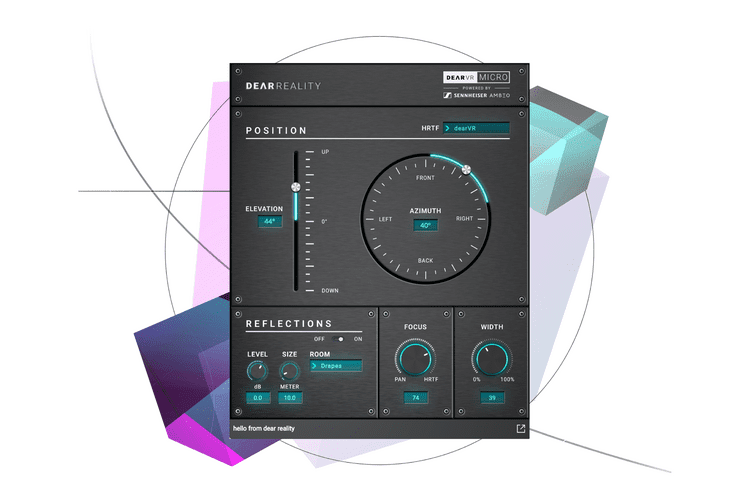
The community reaction was ambivalent. On one hand many producers downloaded the released versions through the AMBEO newsletter ensuring indefinite access without license managers.
On the other hand concerns directly impacted production workflows regarding how long these plugins will remain reliable within active projects. In my own case it was one of the suites I most recommended and used within my workflow.
With the end of support on July 31 2025 the plugins entered a state close to abandonware*.
They remain operational but without maintenance or updates. This leaves them exposed to future incompatibilities with new versions of macOS or Windows and potential changes in VST and AU formats. Consequently they work today but their medium term stability is no longer guaranteed.
*Abandonware is a term that combines abandoned and software and became popular in the nineties to describe programs that were no longer sold or supported by their developers. It was used especially in the field of old video games that were left out of the market due to the rapid obsolescence of hardware the disappearance of the companies that had created them or the lack of commercial interest in keeping them active. Before the appearance of digital stores like Steam or GOG many of these products simply remained in a limbo where they could not be legally purchased but were not officially available either.
Native Instruments Insolvency (January 2026)
In January 2026 Native Instruments GmbH which groups brands such as iZotope, Plugin Alliance and Brainworx formally initiated preliminary insolvency proceedings.
This step does not imply immediate bankruptcy or liquidation but rather a judicially supervised stabilization phase. The company continues to operate under the supervision of an independent administrator with an initial 90 day period to negotiate with creditors evaluate options for recapitalization partial sale or merger and present a viability plan. If this process fails it could escalate toward full insolvency with forced sale of assets.
A bit of historical context helps to understand the current situation.
In April 2021 the firm Francisco Partners acquired approximately 76 percent of Native Instruments.
Following that operation the Soundwide holding company was created integrating Native Instruments, iZotope and Plugin Alliance under a single structure. The operation was structured as a leveraged buyout meaning an acquisition financed largely with debt to be repaid with the future income of the group itself.
The strategy aimed to consolidate brands and generate synergies especially around the Kontakt ecosystem its central sampling platform while optimizing technical resources development and commercial structure under a single management.
Strategically, the integration promised efficiency, expansion, and greater competitiveness.
However, it entailed taking on a financial burden that relied on growth projections in a market that, between 2023 and 2025, began showing signs of slowdown and saturation.
At the same time, rounds of layoffs, internal tensions, and changes in executive leadership occurred. The combination of high debt, moderate growth, and internal restructurings led to financial fragility, culminating in the legal proceedings initiated in January 2026.
Unlike the Dear Reality case this is not a specific closure but a much broader landscape of uncertainty.
- The legendary audio production firm iZotope Ozone RX continues to operate normally although hypotheses circulate regarding a possible future sale or spin off.
- Plugin Alliance keeps its licenses active but has moderated its commercial pace.
- The core of Native Instruments Kontakt Maschine Komplete remains functional although with postponed updates.
The most sensitive point is the structural dependency on the Kontakt ecosystem where hundreds of third party developers base their instruments and libraries on this infrastructure.
If servers or activation systems were affected the impact would reach a wide network of producers and studios relying on that platform to sustain their projects.
Within the professional community an immediate reaction of alert emerged especially due to the fear of orphan licenses.
Although the company communicated operational continuity many studios began reviewing their pipelines diversifying tools and reducing dependency on closed environments.
The absence of Native Instruments at the NAMM 2026 reinforced the perception of instability and coverage in specialized media accelerated the debate on financial sustainability in the pro audio sector.
Beyond the specific case the signal is clear. Today even companies considered industry pillars can undergo deep restructuring processes.
In 2026 the technical stability of small producers can no longer be thought of in isolation it is directly linked to the corporate strength of the ecosystems they depend on.
Massive Layoffs Meta Reality Labs (January 2026)

At the beginning of January 2026, Reality Labs, the Meta division dedicated to XR/VR/AR, executed a significant staff reduction, affecting approximately 1,000 to 1,500 employees (about 10% of its workforce).
The measure was communicated internally on January 13 through a memo from Andrew “Boz” Bosworth, CTO of Meta, and was framed within a strategic shift that reduces the commitment to the immersive metaverse and prioritizes artificial intelligence, lightweight wearables (such as Ray-Ban Meta glasses), and more accessible spatial computing devices.
Since 2021, following the rebranding of Facebook to Meta, the company had invested tens of billions of dollars in Quest hardware, Horizon Worlds, and the development of persistent virtual environments.
However, adoption was lower than projected, and Reality Labs’ accumulated losses exceeded 70 billion dollars.
In parallel, the accelerated growth of generative AI reoriented the corporate focus. Wearables with multimodal AI integration showed greater commercial traction than large-format VR headsets.
The consequences for the spatial audio ecosystem were direct:
- Reduction in XR Audio R&D Part of the team dedicated to 6DoF audio, advanced Ambisonics, and volumetric rendering was dismantled or absorbed into other areas.
Experimental advanced spatialization features in Quest remained in beta or were discontinued. - Simplification of the Quest Roadmap The focus shifted from research into volumetric soundscapes and personalized HRTF to more basic implementations, such as passthrough for existing formats (e.g., Dolby Atmos) and spatialized stereo experiences.
- Cancellation of Demos and Partnerships Technical events and demonstrations planned for 2026, including presentations linked to immersive audio in Latin America, were canceled or redesigned. Independent studios and developers relying on collaborations with Meta had to reconfigure their pipelines.
- Migration Toward Open Alternatives Many VR developers began diversifying their tools, adopting engines like Steam Audio or solutions integrated into Unity and Unreal, reducing direct dependency on Meta’s proprietary infrastructure.
The case of Reality Labs does not imply the end of immersive audio in VR, but it does mark a shift in scale. The “big bet” corporate model for a fully immersive metaverse is losing ground to more pragmatic hybrid solutions: AI + lightweight wearables + moderate spatialization.
For audio professionals, the lesson is similar to the Native Instruments and Dear Reality cases:
Technical innovation depends increasingly on corporate financial decisions.
Closed ecosystems can shift priorities rapidly.
Designing resilient workflows requires diversification and interoperable standards.
In 2026, the risk is no longer just in technological obsolescence, but in the strategic volatility of Big Tech.
New Harman Acquisition (May 2025)
Masimo Corporation, recognized for its non-invasive medical monitoring technology (such as SET pulse oximetry), decided to completely divest its consumer audio division.
On May 6, 2025, it announced the sale of Sound United to HARMAN International, a wholly-owned subsidiary of Samsung Electronics. The transaction included historic hi-fi and home theater brands:
Bowers & Wilkins
Denon
Marantz
Polk Audio
Definitive Technology
HEOS, Classé, and Boston Acoustics
Sound United began operating as a strategic unit within Harman’s Lifestyle division, along with approximately 2,500 specialized employees.
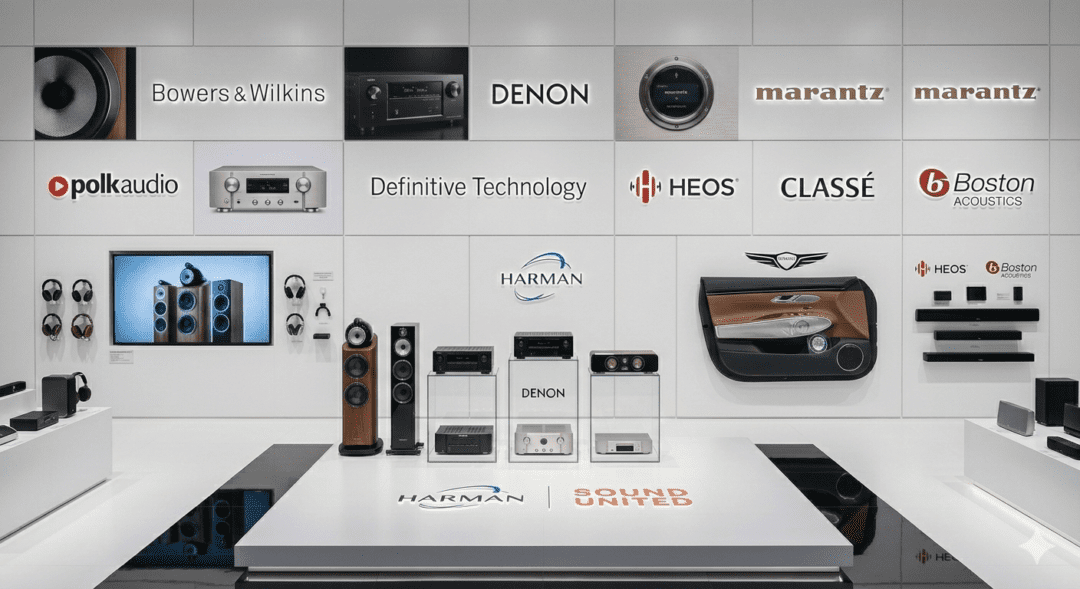
The logic is not just about adding brands but about consolidating a vertical ecosystem where hardware software and distribution align with a single corporate architecture.
In structural terms this is not a crisis like the Native Instruments or Reality Labs cases but rather a process of concentration. However the underlying effect is similar fewer independent players and greater market centralization within tech conglomerates.
For the immersive audio ecosystem this implies that the evolution of playback hardware from the living room to the automobile will increasingly depend on strategic decisions made by global groups. The trend is clear less fragmentation greater vertical integration and accelerated convergence between mass consumption automotive and immersive experiences.
Disputes: Dolby vs. Xperi Licensing Slow Immersive Audio Standardization (2025-2026)
Dolby Laboratories and Xperi Corporation (owners of DTS:X and HD Radio) were involved in intellectual property conflicts that directly impacted the adoption speed of IAMF (Immersive Audio Model and Formats), a standardized framework for immersive audio developed within the MPEG ecosystem.
Its goal is to enable the distribution and playback of spatial sound, based on objects and scenes, in a more flexible and open manner than completely proprietary systems.
The critical point was not technical, but rather legal and commercial; how to license, integrate, and monetize immersive technologies that compete for the same space in televisions, soundbars, automobiles, and streaming platforms.
Dolby Laboratories Position: Technical Control and Licensing
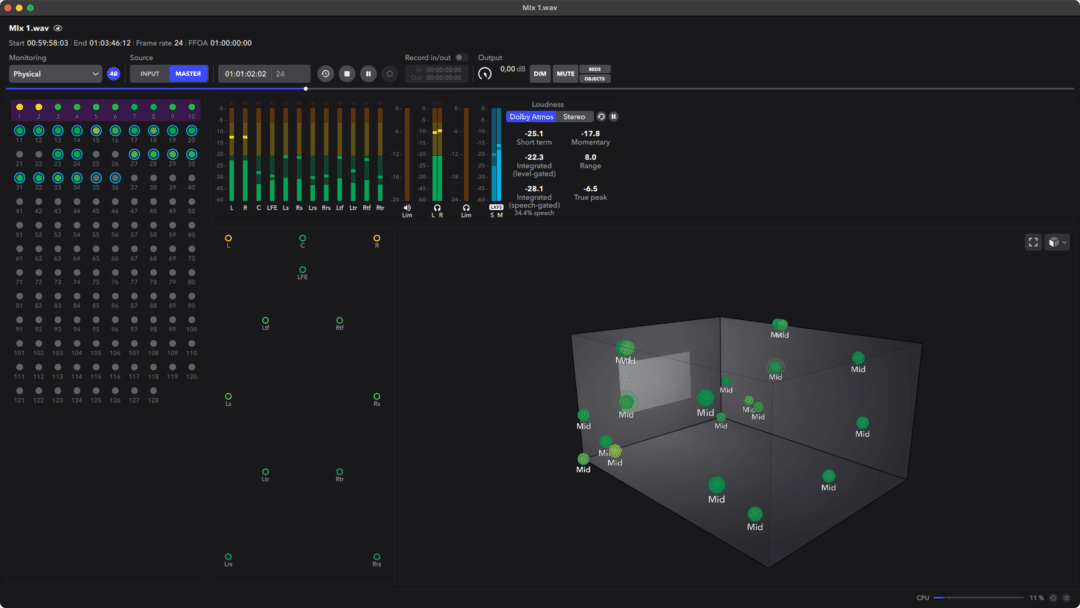
Dolby Laboratories’ stance involves a highly controlled ecosystem centered around Dolby Atmos.
Dolby bases its position on a robust patent portfolio covering core aspects of object-based audio: spatial rendering, dynamic metadata management, and certified professional tools.
By considering these elements part of its protected intellectual property, the company maintains that any implementation using similar principles, especially in the structuring, transport, and interpretation of spatial metadata, must be subject to licensing.
This reduces the possibility of developing parallel, cross-platform solutions without formal agreements.
In practice, the active defense of this framework limits the creation of bridges or conversion tools that would allow the free or automatic transformation of DTS content into Atmos workflows.
For users, studios, and manufacturers, this means that integration with the Atmos pipeline is not merely a technical decision, but a contractual one.
Operating within the ecosystem implies accepting its certification and licensing conditions, which dictates the margin for experimentation, adaptation, or reuse of content between formats.
Xperi's Position: Regulatory Parity and Balance in the Immersive Market
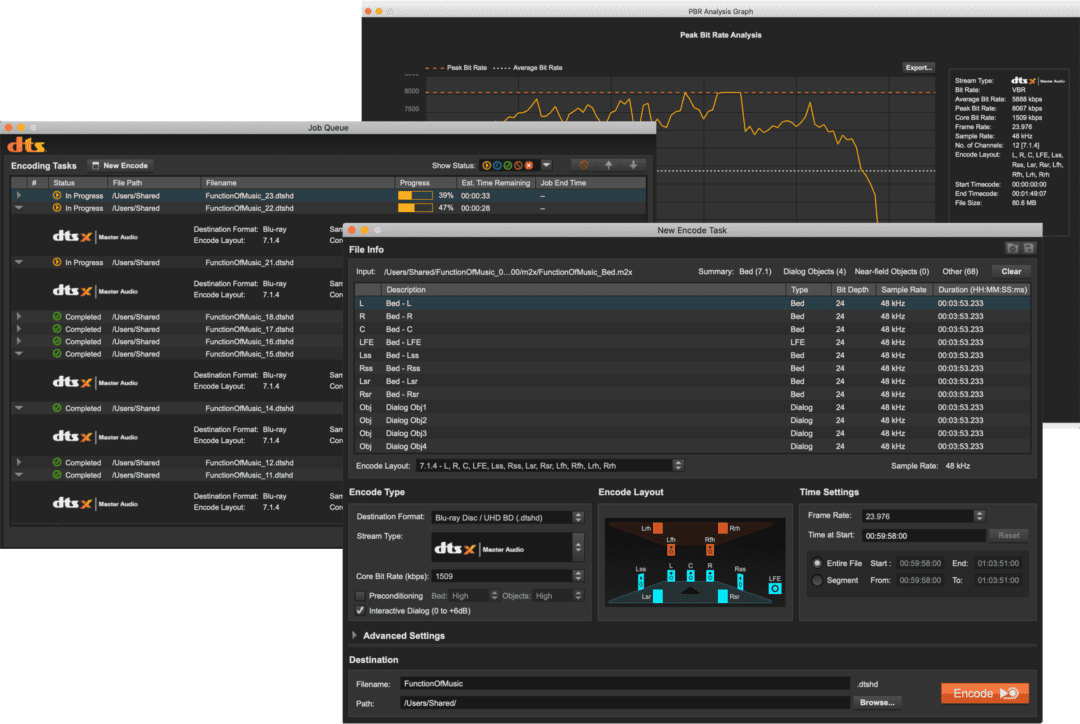
From Xperi’s perspective, the core of the conflict revolves around defending its ability to compete on a level playing field within the immersive market.
As the owner of DTS:X, a hybrid system combining traditional channels with spatial objects, the company maintains that its technology offers a technically viable and commercially competitive alternative to other dominant formats. Its primary argument has been that certain licensing agreements in the sector, particularly with television and automotive manufacturers, effectively limit DTS:X’s market access.
Xperi has contended that some contractual practices favor exclusive integrations or economic conditions that, in practice, hinder the adoption of alternative solutions. In this context, the company has sought parity conditions in patent pools and licensing frameworks under FRAND (fair, reasonable, and non-discriminatory) principles.
The stated objective is to prevent the market architecture from being determined by closed vertical agreements and to ensure that manufacturers and users can choose between different immersive systems without disproportionate contractual barriers. In structural terms, Xperi’s stance does not seek a license-free environment, but rather one where access to technological infrastructure does not depend on power asymmetries between patent holders.
2026 Resilience Checklist
In such a volatile ecosystem, the question is not whether immersive audio is the future, but how to survive its present. Here is my guide for producers and studios:
1. What should we do as producers today?
Assess and organize the software we use
Perform a complete review of all software and identify which plugins, tools, or services depend on online activation, external servers, or physical dongles to function (for example, Native Instruments, DearVR, or other systems requiring a connection or specific hardware).
Always have a backup plan: keep local copies, offline keys, and license backups. Whenever possible, have alternatives that do not depend on online activations or a single provider, so you don’t get locked out if something fails.
Do not depend on a single brand or toolset. Use alternatives when possible and save copies of your work in standard formats (such as WAV, Ambisonics, or ADM-BWF) that can be opened without proprietary software.
Investment in metadata knowledge
Train deeply in metadata: do not just learn how a program moves objects, but understand how they are organized, how they are transferred between programs, and how they are maintained when exporting and playing back across different systems.
Understand that today the value lies not only in creating a more attractive mix, but in ensuring that metadata is transferred correctly and without loss between different programs, systems, and platforms (such as YouTube or mobile apps).
Explore formats such as ADM-BWF (used in Dolby Atmos) and new standards like IAMF or Eclipsa, and understand how to incorporate them into the current workflow.
2. Is it worth migrating?
Yes, if your final client is mass-market or web-centric
If you produce for platforms such as YouTube, VR, web, or mobile devices, adopting IAMF is almost necessary due to costs, compatibility, and future projections.
IAMF or Eclipsa allow for dynamic audio adaptation, use more efficient encoding, and work across different devices without having to export many different versions. This reduces costs and makes content more flexible.
Although it requires learning and adjustments at first, in the long run, it allows you to work with more freedom and spend less as production volume increases.
No, if your niche is cinema / premium / high fidelity
If you work in commercial cinema, streaming platforms, Dolby Atmos-equipped theaters, or high-quality projects, Dolby Atmos remains the most widely used standard both technically and contractually.
In this case, IAMF serves as a complement: Dolby Atmos remains the master version, and other formats are used to adapt and distribute content across different environments.
Account for the total cost from the beginning: an Atmos project can cost up to three times more than a conventional one when you factor in tools, licenses, and learning time. Include this in the budget to avoid surprises.
3. How to create a workflow (pipeline) that resists changes and failures?
Work with a single master file from which all versions originate.
Design the workflow based on an open, high-quality master format. Work in third-order Ambisonics or a format with standard objects and metadata, such as ADM-BWF or IAMF.
From that main file, generate the different delivery versions:
Dolby Atmos, for cinema or premium distribution.
IAMF or Eclipsa, for web, streaming, and interactive content.
Binaural, for headphone listening, VR, or mobile devices.
Do not mix solely within a closed format or rely on a single software for the final version. Doing so makes it difficult to reuse or adapt content for new platforms.
Automate and verify processes. Do not rely solely on what you hear.
Incorporate analysis systems that monitor the technical consistency of the project, not just the sonic aspect. Use automated tools, including AI, to check the phase between channels or objects, spatial positions, and verify that metadata remains correct throughout the process.
Implement automatic checks before every final render (for example, spatial consistency analysis, presence of critical metadata, and compatibility with target platforms) to reduce human error and rework.
Do not just keep the final audio. Also save the different versions of configuration files, metadata, and quality control reports. These elements are part of the project and allow you to reconstruct, correct, or adapt the work in the future without starting from scratch.
4. Which standards to prioritize?
IAMF / Eclipsa: for democratization and the web
If the focus is on the web, interactive content, or mass-market platforms, it is advisable to adopt IAMF (for example, Eclipsa), as it is designed to better adapt to those diverse environments and devices.
IAMF is an open and flexible standard for immersive audio. It allows for working with objects and dynamic metadata, adapting the sound to different devices, making it a very suitable option for content not intended for cinema.
Dante / AES67: for live stability
If you work with live sound, permanent installations, or networked systems, it is advisable to use networking standards such as Dante or AES67, as they allow for stable and compatible audio transmission between different equipment.
Dante allows for the creation of stable and scalable audio networks. AES67, on the other hand, ensures that equipment from different brands can communicate with each other, reducing errors and issues in critical environments.
Personalized HRTF based on each individual’s physical characteristics.
Prioritize tools that allow for personalized listener profiles, such as adapted HRTF systems (for example, Embody), so the mix is perceived more realistically by the listener.
Adjusting the HRTF to each listener allows immersive audio to be perceived with greater precision and naturalness, especially in headphone-based experiences like VR or gaming.
In this context, the immersive audio industry is not collapsing, but rather undergoing a profound reconfiguration.
The cases of corporate integration, insolvencies, mass layoffs, and licensing disputes reveal a common pattern: the technical infrastructure upon which producers, developers, and studios rely is increasingly concentrated in the hands of conglomerates with their own financial and strategic agendas. And we already know the results this yields in other industries.
The movement is twofold. On one hand, there is greater vertical integration: hardware, software, codecs, and distribution are converging within controlled ecosystems. On the other, there are growing tensions surrounding open standards, interoperability, and licensing models.
The question is no longer simply which format sounds better or which tool is more efficient, but rather under which corporate and contractual framework one can work with stability in the medium term.
Where are we headed? Everything indicates that the market will trend toward less fragmentation and greater concentration, especially in mass consumption and the automotive sector. In parallel, the professional sector will seek resilience through tool diversification, the adoption of standards capable of functioning seamlessly across different environments, and a reduction in dependency on single platforms.
Immersive audio will continue to grow, but it will do so in an environment where technical sovereignty, the ability to control one’s own workflow, will be just as important as sonic innovation.
Personalized Mentorship in Immersive Audio.
1:1 Guidance to Develop Immersive Projects from a Technical, Perceptual, and Strategic Approach