In the first installment, ‘Immersive Audio in Latin America Doesn’t Have a Talent Problem; It Has a Disconnect from Our Technical Reality’, we analyzed how the distancing from physical space and the use of generic references condition the practice of immersive audio in the region.
However, the survey highlights a deeper structural friction. If talent is not the primary limitation, access certainly is. This second part analyzes the data and explains why immersive production processes in Latin America are shaped by entirely different technical and productive logics.
*At the time of writing this article, the survey has already surpassed 100 responses from audio professionals across different Latin American countries, reinforcing the consistency of the observed patterns and the relevance of the conclusions drawn from this data.
Budget-Driven Architecture
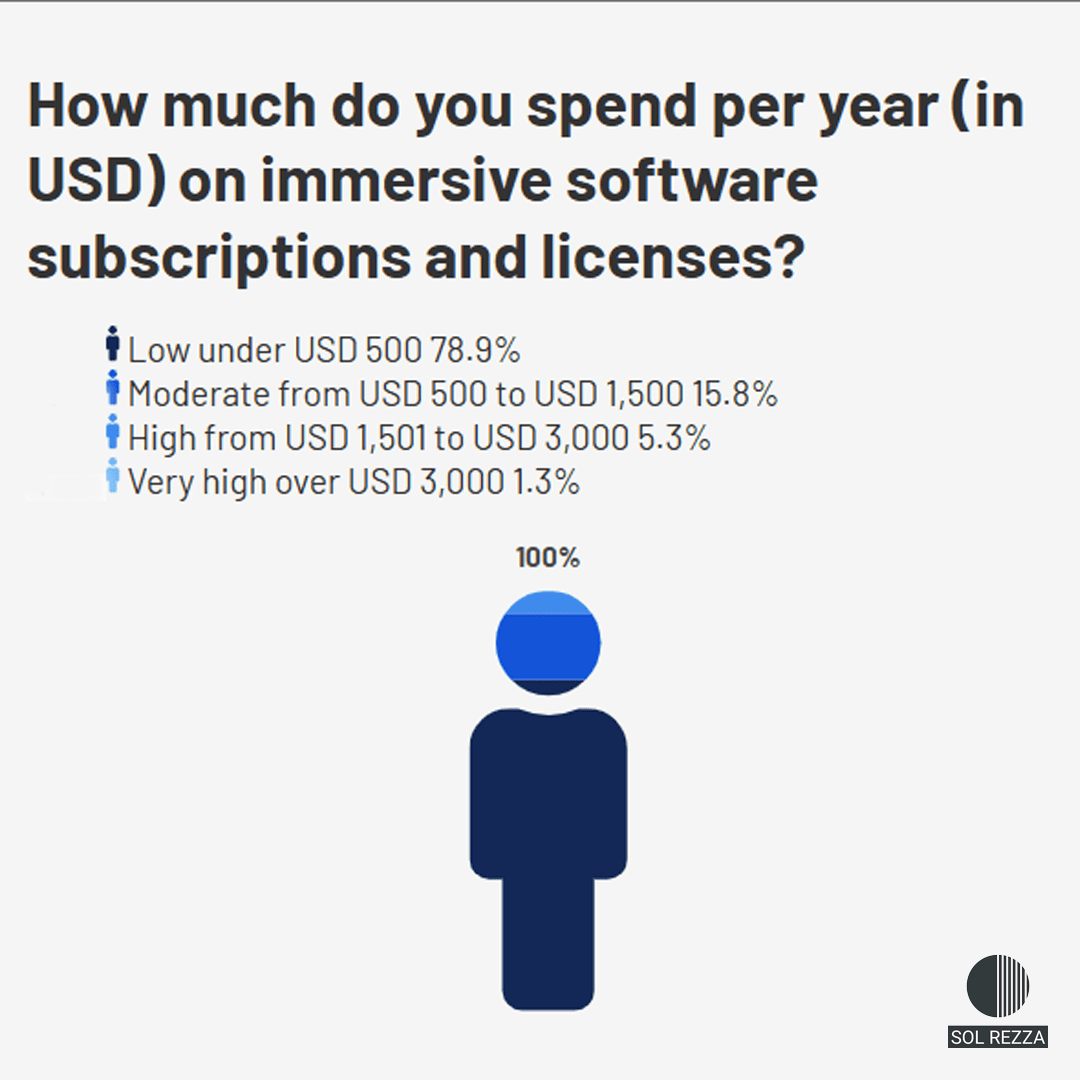
78.9% of immersive audio professionals in Latin America invest less than USD 500 annually in licenses and subscriptions.
In an industry that promotes closed ecosystems and monitoring systems with costs far exceeding that threshold, this figure exposes a fundamental gap.
It is necessary to address what the sector tends to overlook: the use of unofficial channels or ‘cracked’ software. Far from evidencing a lack of ethics or professionalism, this phenomenon must be read as the operational symptom of a persistent asymmetry.
In the Latin American context, immersive audio does not present itself as a finished product or a ‘turnkey’ system; instead, it is configured as a handcrafted infrastructure that each professional must build from scratch.
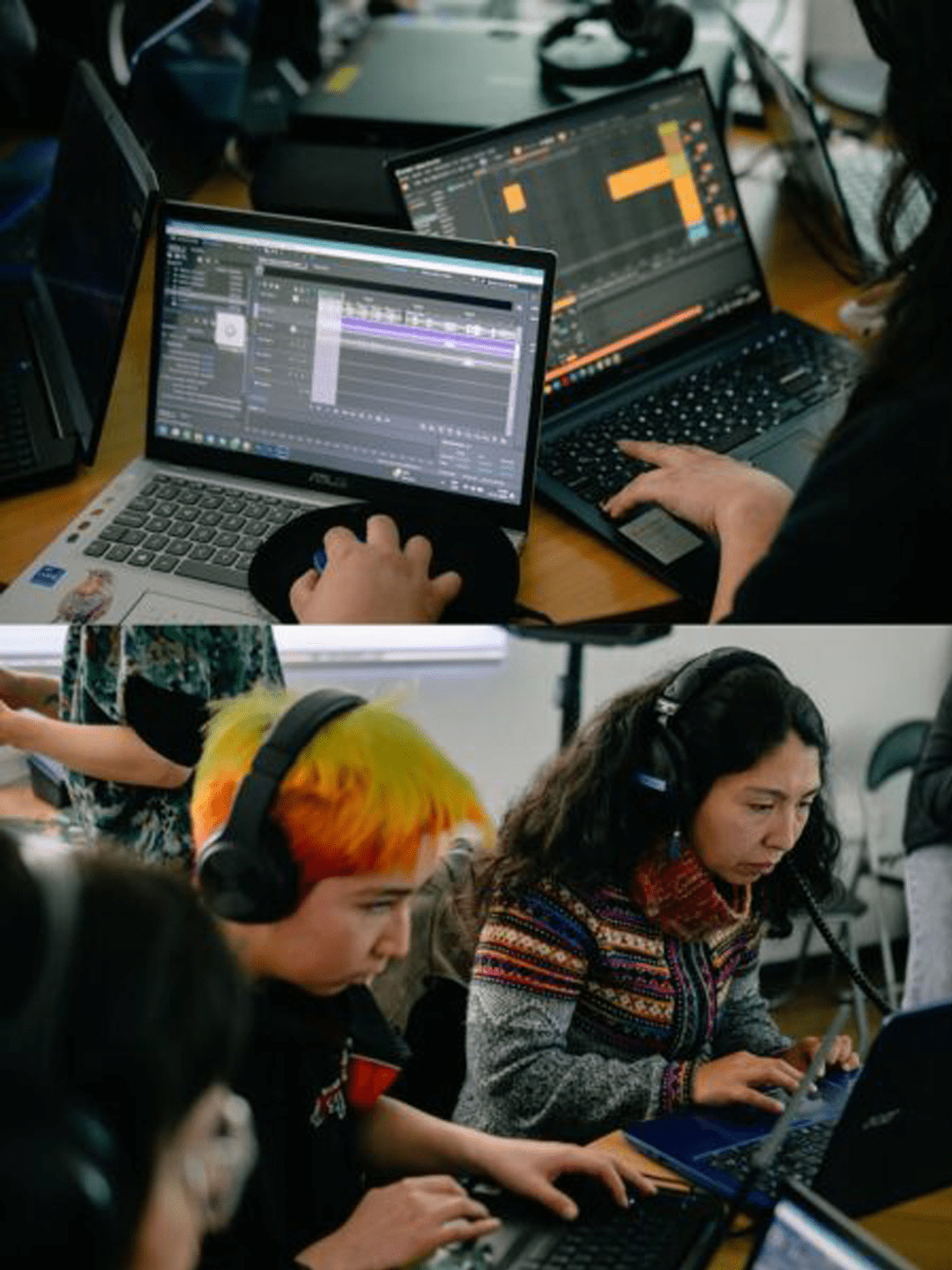
This infrastructure is sustained by a high capacity for technical adaptation and a network of mandatory ‘patches.’ While global proprietary software standards are designed to operate almost exclusively and seamlessly within certified ecosystems—generally macOS-based—the regional reality is different: most professionals work in Windows environments, as analyzed in the previous installment.
The lack of native support and the rigidity of these systems force engineers to articulate networks of heterogeneous tools and customized workflows to approach global standards.
The result is not only increased technical complexity but a fragile system, sustained by individual solutions where global design models are incompatible with the actual conditions of the region
Tactical and Strategic Investment to Compete on a Global Level
Despite this restrictive landscape, the data reveals a paradox of high professional commitment. Latin America is thus moving away from the myth of the ‘low-cost market’ to position itself as a region of strategic relevance. Although current spending on software licenses remains relatively low, the survey shows a clear willingness to invest in hardware and critical tools when their professional value is tangible and directly linked to revenue generation.
Specifically, 42.1% of respondents state they are prepared to invest between USD 501 and USD 2,000 annually, while 15.8% are willing to allocate between USD 2,001 and USD 5,000 for strategic equipment such as multichannel interfaces, Ambisonic microphones, or professional monitoring systems.
These figures confirm that the professional in Latin America is not looking for shortcuts. There is a deep commitment to the craft, where saving, prioritizing, and sacrifice are part of the process to access the best tools the context allows.
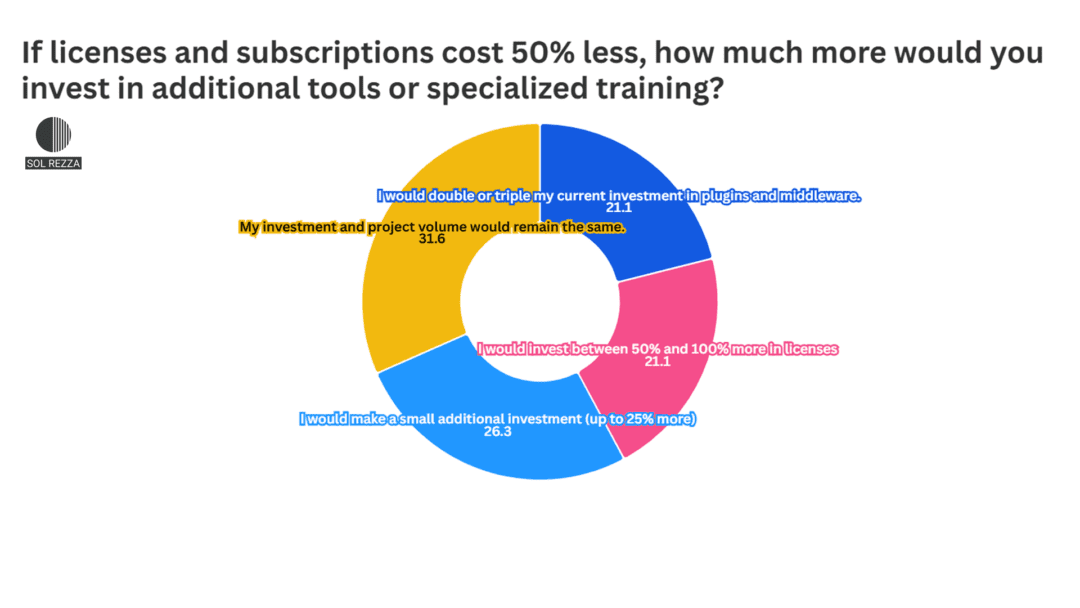
The use of informal channels or open-source suites is, in many cases, a response to the absence of scalable and sustainable licensing models. In fact, more than 52% of specialists state they would significantly increase their investment if prices were adjusted to regional realities.
The message for companies and developers is direct: the region’s professionals invest when there is economic viability and a clear link between the tool and its capacity to generate work.
If software offered licensing models aligned with local realities, alongside technical support that allowed for full mastery and capitalization of its potential, investment would be a logical consequence rather than an exception.
In the current scenario, the professional does not acquire software as an isolated input, but as a strategy for operational autonomy.They do not merely use a tool: they bear the cost of sustaining it and making it viable, projecting onto it the quality of their work within an environment that, in most cases, is not designed to support that effort.
Back to the Manuals
The user manual remains the formal starting point and the fundamental technical reference for any tool; however, the data shows a significant gap in effective access to that knowledge.
47.4% of specialists consider official technical documentation to be complex and poorly aligned with their daily operational needs; a difficulty amplified by the language barrier, as users in the region must frequently work with manuals that are not available in their native language.
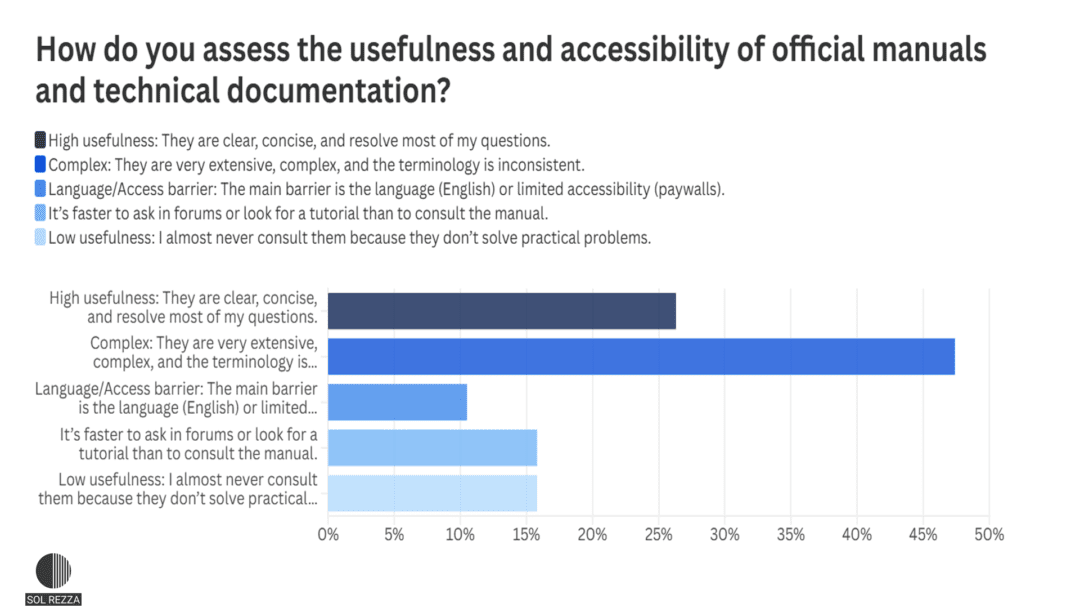
This disconnection has led 73.7% of respondents to use YouTube as their primary method for troubleshooting, while 36.8% are already integrating Artificial Intelligence tools as recurring technical support.
While these resources offer immediacy, their predominance exposes a growing dependency that distances professionals from verified, official information sources.
This situation is not the result of an arbitrary choice; rather, it serves as a symptom of a structural gap that weakens the direct link between manufacturers, developers, and end users.
In the field of immersive audio, this fragmentation of knowledge has critical consequences.
The complexity of multichannel workflows demands absolute precision in the configuration of objects and metadata. When the troubleshooting of spatial monitoring or file export depends on external tutorials rather than fundamental technical references, the standardization required for regional productions to compete globally is compromised.
Without access to data, engineering loses its precision, devolving into mere trial and error. This instability undermines the entire workflow and jeopardizes the technical integrity of the final output.
Methodological Nodes and Technical Autonomy in the Latin American Immersive Ecosystem
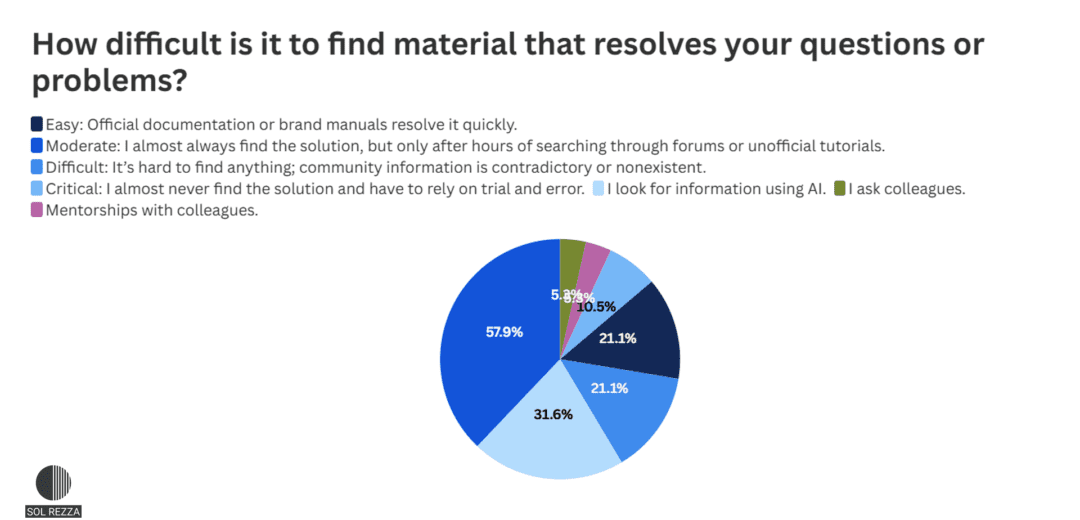
The learning of immersive audio in the region does not take place in manufacturer laboratories or certified rooms; rather, it develops within peer-to-peer support networks and through individual experimentation.
The survey data confirms this reality: 57.9% of professionals, even those with institutional training, simultaneously turn to mentorships and alternative sources to solve specific production challenges.
In this context, it is essential to consolidate knowledge nodes that function as conceptual and technical frameworks, capable of sustaining an informed and reliable practice in resource-limited environments.
The objective of these nodes is to train professionals who are not dependent on a specific brand; experts capable of choosing technology based on the needs of each project, rather than simply because it is the only tool available or known to them.
By understanding the logic of spatialization beyond a particular software, regional professionals can make more robust decisions and move freely between different brands, platforms, and tools, adapting the technology to their context instead of adapting themselves to the technology.
Far from restricting the market, this approach to technical autonomy can broaden the use and adoption of a wider diversity of spatialization software, formats, and tools.
By reducing dependency and the fear of the unknown, it strengthens the ability of LATAM professionals to build networks, share knowledge, and interconnect expertise.
This capacity does not only sustain the local industry; it transforms it into an experimental laboratory where technical judgment prevails over the tool, ensuring that the regional immersive ecosystem is diverse, interoperable and, above all, sovereign.
The Construction of Technical Criteria
This analysis does not seek to list deficits, but rather to identify structural frictions that, once addressed, would unlock both the economic and creative potential of the sector.
In Latin America, a specific form of applied engineering has evolved: the ability to operate within hybrid systems, interpret incomplete documentation, and maintain non-standardized infrastructures constitutes a highly specialized set of technical competencies, shaped by contexts of discontinuous implementation.
For the industry, the diagnosis is clear. If developers and standardization bodies move beyond approaches focused exclusively on sales metrics, they will find in LATAM a market ready to invest when offered operational viability, continuity, and technical coherence.
The demand is not for “simplified” technologies, but for access models compatible with our actual workflow architecture: predominantly Windows-based environments, heterogeneous pipelines, and distributed, collaborative learning ecosystems.
The next step is the formalization of an autonomy that is already operational. By consolidating knowledge nodes that prioritize situated technical evaluation—above brand or platform loyalty—the regional immersive ecosystem stops operating under reactive adoption logics and begins to exercise an active capacity for analysis, selection, and technological adaptation based on its own workflows.
In this framework, innovation in Latin American immersive audio will not depend on the emergence of new tools, but on the collective construction of criteria: shared decision-making frameworks that allow technologies to be evaluated according to their real impact on daily practice, operational sustainability, and the effective circulation of knowledge.